
Culture and art add to cities in both qualitative and quantitative ways. Information like the GDP per capita provided by these industries is often more readily measured than how culture and art may contribute to community and resilience. Due to this discrepancy, the importance of art and culture can often be overlooked. This is unfortunate as art and culture can create a lasting and positive impact on a city and its citizens. Cities that are rich in art and culture are often considered ‘cultural hubs,’ and are places where citizens and often tourists gather. This is important as these ‘hubs’ can stimulate the economy as well as aid in creating a strong sense of community. These Creative Economy’s may be situated anywhere worldwide, as the motivations and logistics behind implementing a creative city differ. In order to explore this further five exemplary countries from across the world will be examined. These five cities differ in economic position, however despite financial and other obstacles all five cities have seen success due to their Creative Economy.
Santa Fe, New Mexico


Right: Hispanic man partaking in an art gallery (Santa Fe, Hispanic Culture). Left: Native American Women partaking in a tribal dance (Santa Fe, Visiting Santa Fe).
“Culture has always been at the heart of Santa Fe and has been an integral part of the city’s history and cityscape” (UNESCO, 2005, Santa Fe). History plays an integral role in the City, and flows into the community, art, architecture and numerous other areas of life. This is important, as a diverse community of people inhabit Santa Fe, specifically Native Americans, and the ancestors of Spanish colonialists (TOURISM Santa Fe, History, para. 17). Santa Fe focuses on “making intercultural connections within the community, raising the visibility of Santa Fe’s arts and cultural assets and bringing attention to Santa Fe’s wealth of artists and cultural resources via various global platforms” (UNESCO, 2016, Creative Cities Network Report, p.4). “The community takes pride in its unique cultural heritage, working to maintain a flourishing arts community, employ artists and attract tourism” (UNESCO, 2016, Creative Cities Network Report, p.1). This has been integral in Santa Fe’s success as a ‘cultural hub,’ and shapes the ways in which the community engages with the Art Sectors. ). The efforts made to embrace art and culture have resulted in a large amount of tourists visiting Santa Fe and stimulating the economy.
Santa Fe places a large importance on art/cultural development, and in order to support these industries the City has implemented a plan to fund these endeavors. In Santa Fe, “one percentage point of Santa Fe’s hotel bed tax [is allocated] to the City’s cultural agency [and] the Arts Commission, in support of local arts organizations that present performances, exhibitions and festivals” (UNESCO, 2016, Creative Cities Network Report, p.1). Additionally, “two percent of the cost of City buildings and infrastructure is dedicated to support public artworks that employ artists, contribute to the arts economy, build awareness of the arts in the community and enhance civic spaces throughout the city” (UNESCO, 2016, Creative Cities Network Report, p.1). The City has also initiated “innovative cultural entrepreneurship programs developed and operated with expert community partners by the City of Santa Fe Economic Development Division benefit and enlarge the cultural industries sector” (UNESCO, 2016, Creative Cities Network Report, p.1). The municipality of Santa Fe is heavily involved in the arts, and demonstrates this by directing funds from tourism back into the community.
Quebec City, Canada
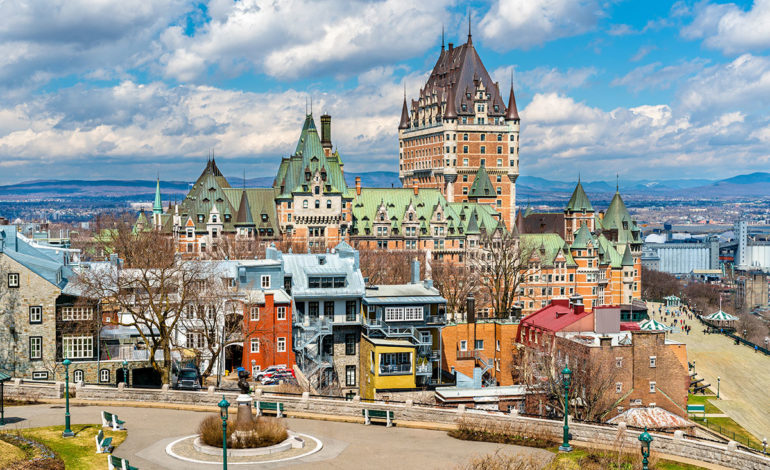
(Canadian Immigrant, May 2011)
Quebec City is known for “its dynamism, creativity and lively literary scene, attesting to the encounter between French and English-speakers and indigenous inhabitants” (UNESCO, Quebec City, para. 1). Quebec City is incredibly diverse and celebrates culture along with art. The City is a hub for literary works and “currently boasts 250 writers of literary fiction and over 100 guilds, publishers and booksellers who are at the heart of the revival of Quebec literature” (UNESCO, Quebec City, para. 1). The Creative Economy is supported by public and private enterprises and through citizen engagement.
“Numerous poetry evenings, thematic walks, festivals and other events take place throughout the year in Québec” (UNESCO, Quebec City, para. 2). Quebec City has placed a continual focus on the growth of creative sectors, “in 2014 [the municipal government] consulted with the art scene on its vision for developing the art-form in Québec. This is important a Quebec City is allowing its citizens input into how to improve the creative sectors. The outcome of this was a document entitled “‘2025 Cultural Development Vision’, in which the City undertakes to incorporate culture into the daily lives of all citizens, strengthen synergies between creators, invest in culture, conduct outreach and develop a favorable ecosystem for writers and artists” (UNESCO, Quebec City, para. 3). In order to achieve this vision, Quebec City “regularly renews its support programmes for the artistic and literary scenes.” (UNESCO, Quebec City, para. 3).
Dublin, Ireland
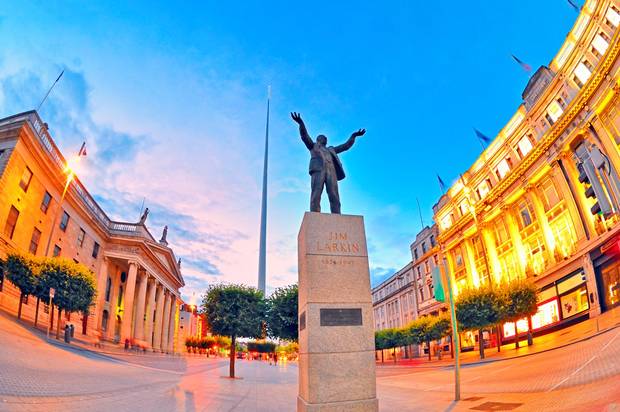
(
Dublin is a famous literary city, boasting as home for “four Nobel Prize Laureates for Literature” (UNESCO, Dublin, para.1). Creativity is in all form is encouraged and valued in Dublin. Dublin’s “literary influence has spread to the four corners of the world” (UNESCO, Dublin, para.1), and therefore Dublin has become a cultural hub.
Dublin hosts numerous events, and conducts numerous awards/ceremonies in order to nurture the Creative Economy. Dublin hosts the “International Impac Dublin Literary Award, the world’s most well-endowed prize for a single novel” and is also home to the “Dublin Theater Festival, the oldest of its kind in the world” (UNESCO, Dublin, para.2). Dublin also has named three bridges and numerous streets after writers, in order to promote and celebrate art (UNESCO, Dublin, para.2).
“The role of creativity and innovation is recognized, valued and embedded in city programmes and policies, and provides industry with a competitive advantage and enriches the social, economic and cultural lives of citizens.” (UNESCO, Dublin, para.3). The success of the Creative Economy in Dublin can be attributed to the Cities on going support and recognition. Dublin develops social programs aimed at educating youth on art (UNESCO, Dublin, para.4), this fosters creativity and will lead to Dublin’s long term success.
Cape Town, South Africa
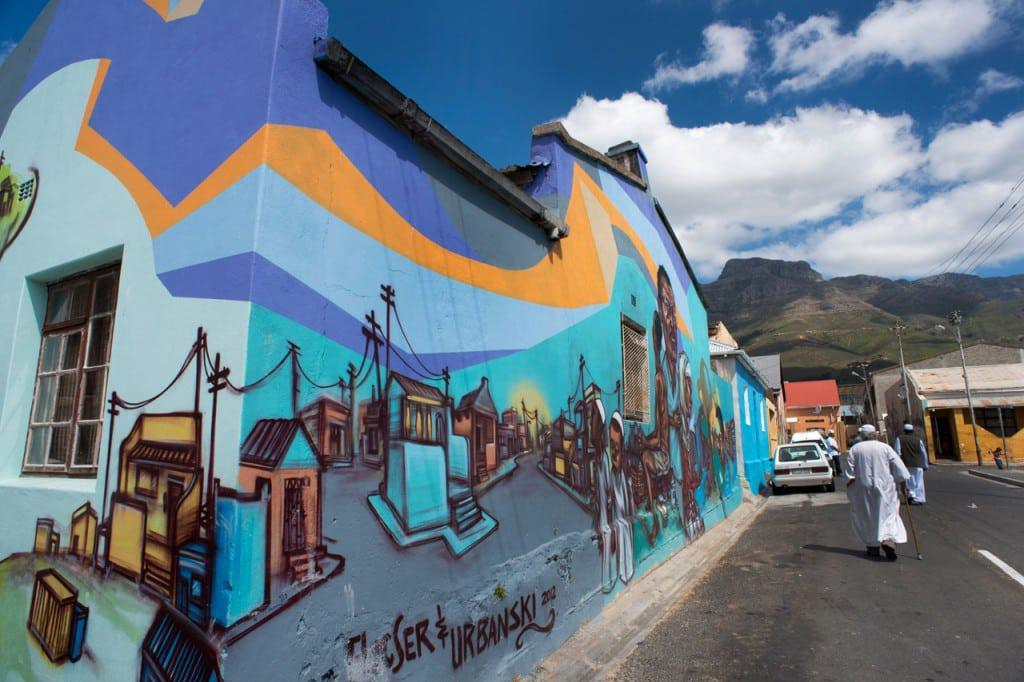
(Love Cape Town, Street Art Tour)
Cape Town is a fascinating City with a “rich and complex history… endowed with abundant creative talent, [and] a diverse and vibrant population (UNESCO, Cape Town, para. 1). “Since the democratization process initiated in 1994, Cape Town has used creativity and design as tools in the ongoing process of rebuilding, reconnecting and repositioning the city to transform lives and to build a better, more resilient city for all.” (UNESCO, Cape Town, para. 1). This fact alone is exemplary as this City has clearly identified the value of the creative economy and is implementing it for both economic and social reasons. Economically, this approach of using creativity to build resilience has resulted in an estimated “US$1 billion gross value added and provided approximately 27,760 jobs in Cape Town, amounting to 2.2% of the total formal employment in the city in 2014.” (UNESCO, Cape Town, para. 1). Cape Town utilizes local events as “powerful engines to share experiences, knowledge and best practice with diverse local and international audiences and design practitioners” (UNESCO, Cape Town, para. 4). From a system’s perspective, it can be inferred that these events help promote a sense of community within Cape Town, through the application of “transformative design to create solutions to address urban challenges (UNESCO, Cape Town, para. 3).
Cape Town hosts “nine major annual design-related events and a spectrum of smaller, more focused design events held throughout the year.” These events are all designed to “use culture, creativity, design and design thinking principles to improve the lives of the people in Cape Town.” (UNESCO, Cape Town, para. 4). This includes efforts to design a more inclusive city, regarding transportation and mobility initiatives (UNESCO, Cape Town, para. 4). The major design events include the Open Design Festival, which “links design to innovation, education and community” (UNESCO, Cape Town, para. 2), and the globally acclaimed Design Indaba Festival, which “empowers people to create a better future through design and creativity” (UNESCO, Cape Town, para. 2).
Cape Town has identified “creativity and culture as critical components in the development of an active citizenry, environmental sustainability, social cohesion, economic growth, and community building” (UNESCO, Cape Town, para. 3). The city is advanced compared to other cities in the geographic region, as they have recognized and are placing a high level of importance on utilizing creativity and culture. This city is truly exemplary as they are utilizing art in order to better their current situation. “Cape Town is committed to democratizing design, strengthening the local and international design-ecosystem, embedding design-led innovation into the city administration, and using design as a problem-solving tool for urban challenges to improve the lives of its inhabitants.” (UNESCO, Cape Town, para. 3).
Buenos Aires, Argentina
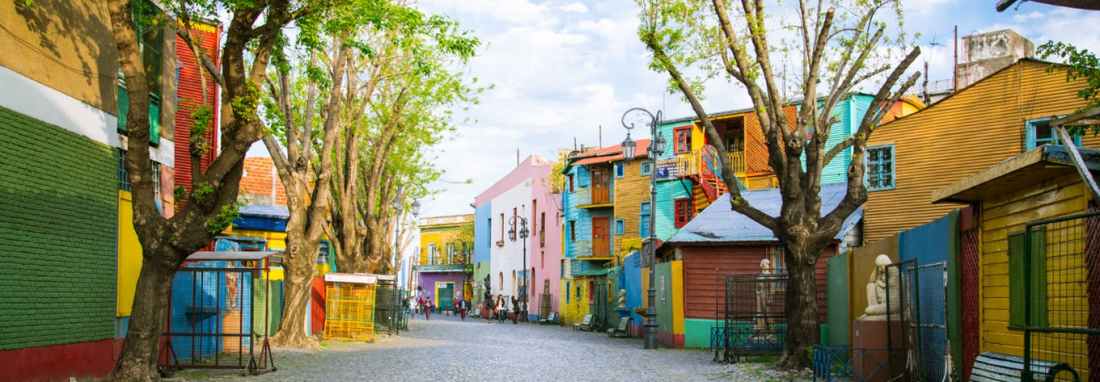
(International Volunteer HQ, Buenos Aires)
In Buenos Aires, “creativity is seen as a key factor in economic and social development” (UNESCO, Buenos Aires, para. 1). The City has a consolidated creative sector that has “grown rapidly in recent years,” and accounts for “8.6 % of the city’s GDP and 9.1 % of the city’s workforce, employing almost 150,000 people.” (UNESCO, Buenos Aires, para. 1). Buenos Aires has clearly experience economic prosperity through the creative economy, and in order to accomplish this support from both citizens and government in necessary.
Buenos Aires has been placing an ample focus on using public – private enterprises to “to harness the energy of its design sector for the development of innovative initiatives on the local, regional and international levels” (UNESCO, Buenos Aires, para. 4). This City is working towards leading the way for creative economies, spanning the fields of “fashion, architecture, industrial, interior and urban design with a keen focus on incorporating the latest technology [into design]” (UNESCO, Buenos Aires, para. 4). This facility “hosts the International Festival of Design, an event addressing professionals, students and the public at large which showcases sustainable and socially inclusive design.” (UNESCO, Buenos Aires, para. 3). The Metropolitan Design Center (CMD) is a “major design and industrial institution of the city” (UNESCO, Buenos Aires, para. 3), this center operates as a creative ‘hub’ for all citizens and visitors alike. The CMD’s “main objectives are to encourage private and public design-related initiatives; support the sector’s internationalization and contribute to turning Buenos Aires into a benchmark of design in Latin America” (UNESCO, Buenos Aires, para. 3).
The creative economy receives support from public sectors as well, “the Ministry of Economic Development of Buenos Aires promotes the growth of the creative industries through a district development policy” (UNESCO, Buenos Aires, para. 2). This policy “incorporates economic incentives to promote the establishment of creative industries in specific districts; undertakes major public works projects to redress inequalities in infrastructure and transport connectivity; and fosters the recovery of public areas for recreation and socialization” (UNESCO, Buenos Aires, para. 2). This policy “promotes creativity and creative expressions, especially among vulnerable groups and local communities” (UNESCO, Buenos Aires, para. 5). The districts in which these policies are implemented are all underdeveloped neighborhoods (UNESCO, Buenos Aires, para. 2). It can be inferred that these policies are in place to support and develop these neighborhoods through the creative economy, in hopes that they will follow the rest of the city in the trend towards economic growth.
Conclusion
Culture and art has been proven to create positive and lasting effects on communities. The Creative and Cultural Economy are of the utmost importance to both developed and developing cities. Cape Town, South Africa and Buenos Aires, Argentina utilized culture and arts in order to increase resilience, create a sense of community, and to boost their economic standing. This is remarkable as these two cities have been able to showcase the importance of art and culture amongst cities that are not part of the ‘western world’. Other more established cities such as Dublin and Quebec City continue to invest in this sector, as they have been able to live the benefits of being ‘creative hubs,’ and wish to expand on these programs.
References
UNESCO, (n.d.) Buenos Aires. Retrieved February 13th 2019, from https://en.unesco.org/creative-cities/buenos-aires
[Image] Canadian Immigrant (May 2011). Retreived February 19th from https://canadianimmigrant.ca/settlement/profile-of-quebec-city-quebec
UNESCO (n.d.). Cape Town. Retrieved February 13th 2019, from https://en.unesco.org/creative-cities//node/957
[Image] Love Cape Town (n.d.) Street Art Tour. Retreived February 19th from http://www.capetown.travel/visitors/see-do/woodstock-street-art-tour-in-cape-town/
UNESCO (n.d.). Dublin. Retrieved February 13th 2019, from https://en.unesco.org/creative-cities//node/11
[Image] Travel Ireland. (n.d.) Retreived February 19th from https://www.independent.ie/life/travel/ireland/10-hidden-historical-facts-about-dublin-how-many-do-you-know-34604601.html
[Image] International Volunteer HQ, Buenos Aires. Retreived February 19th from https://www.volunteerhq.org/volunteer-in-argentina-buenos-aires/
UNESCO (2005). Santa Fe. Retrieved February 12th 2019, from https://en.unesco.org/creative-cities/santa-fe
[Image] Santa Fe (n.d.) Hispanic Culture. Retrieved February 13th from https://santafe.org/Visiting_Santa_Fe/Art/Hispanic_Arts/
[Image] Santa Fe (n.d.) Visiting Santa Fe. Retrieved February 13th, from https://santafe.org/Visiting_Santa_Fe/Native_American_Culture/index.html
UNESCO (n.d.) Quebec City, Retrieved January 13th 2019, from https://en.unesco.org/creative-cities//node/1061
UNESCO (2016). 2005-2015 Creative Cities Network Report: A Platform for Cultural Sector Development and International Recognition of Santa Fe

 Social Innovation